


12 Mar
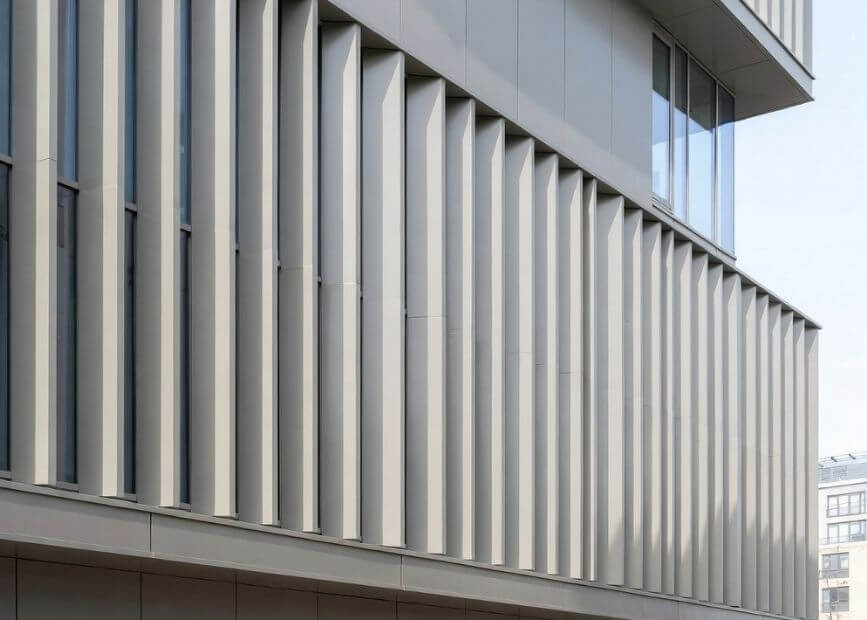
In contemporary architecture, designers increasingly seek materials that create calm, balanced visual environments. Instead of reflective surfaces that dominate the streetscape, many projects now favor matte architectural finishes that soften light and integrate buildings with their surroundings.
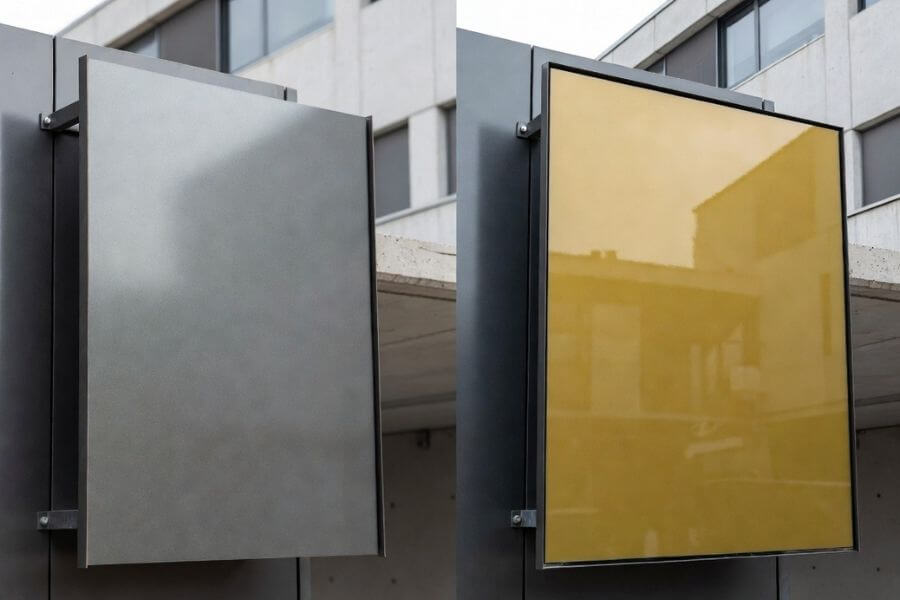
This shift reflects a broader design movement toward natural materials, restrained palettes, and human-scaled architecture. As a result, matte aluminum composite panels have become a preferred façade material in commercial buildings, civic architecture, and branded corporate spaces.
Unlike glossy coatings that amplify reflections, matte surfaces diffuse light and reduce glare. This characteristic allows architects to control façade appearance throughout the day while maintaining visual stability across large building envelopes.
A matte finish refers to a coating surface with low gloss reflectivity, typically within a range of 6–15 Gloss Units (GU). At this level of reflectivity, light is scattered rather than mirrored, producing a soft and stable appearance across façade panels.
In architectural panel systems, this finish creates both aesthetic and functional benefits.
| Characteristic | Matte Finish Panels | High-Gloss Panels |
|---|---|---|
| Gloss Level | 6–15 GU | 30–70 GU |
| Visual Character | Soft, subdued façade appearance | Bright and reflective |
| Glare Control | Excellent | Limited |
| Fingerprint Visibility | Lower | Higher |
| Maintenance Needs | Easier maintenance | More frequent cleaning |
Because of these properties, matte aluminum composite panels are widely used in:
curtain wall façades
ventilated rainscreen systems
building envelope cladding
interior architectural walls
signage and feature elements
Matte surfaces also improve façade readability. When large panel surfaces receive direct sunlight, reduced reflectivity prevents harsh glare and allows the architectural composition to remain visually clear.
Architectural color selection often begins with natural references. Many matte surface palettes draw inspiration from stone, soil, and mineral tones found in the natural environment.
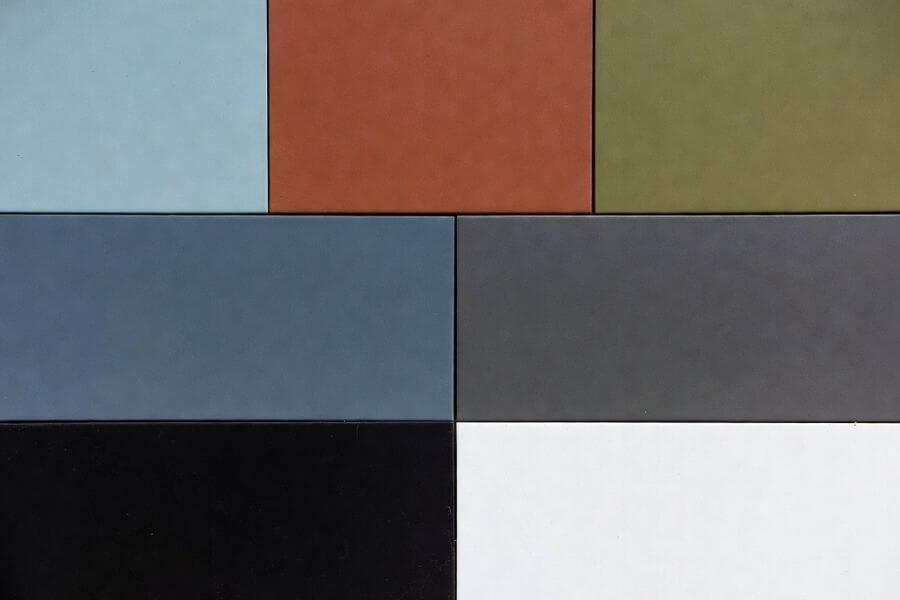
These colors help buildings feel grounded within their urban or landscape context.
Common matte architectural colors include:
Limestone Blue
A cool mineral tone that communicates calm structural strength and works well in institutional architecture.
Clay Red
A warm earthy red inspired by natural clay and sandstone. This tone introduces warmth into large façades without overwhelming the composition.
Olive Green
A muted green with subtle gray undertones that blends easily with landscaping and urban vegetation.
River Rock Gray
A neutral stone gray that provides balance across large panel façades and anchors surrounding architectural elements.
Slate Black
A deep matte black used to introduce contrast and reinforce architectural geometry.
Cloud White
A soft white finish that delivers brightness without excessive reflectivity.
From a façade design perspective, these tones help architects shape visual rhythm and building scale. Alternating matte colors across large panel systems can reduce the perceived mass of a building while reinforcing architectural identity.
Achieving a durable matte finish requires precise coating technology and controlled production processes.
Most architectural matte aluminum composite panels rely on PVDF fluoropolymer coatings applied through a continuous coil coating process. This industrial coating method ensures uniform color, consistent gloss levels, and long-term weather resistance.
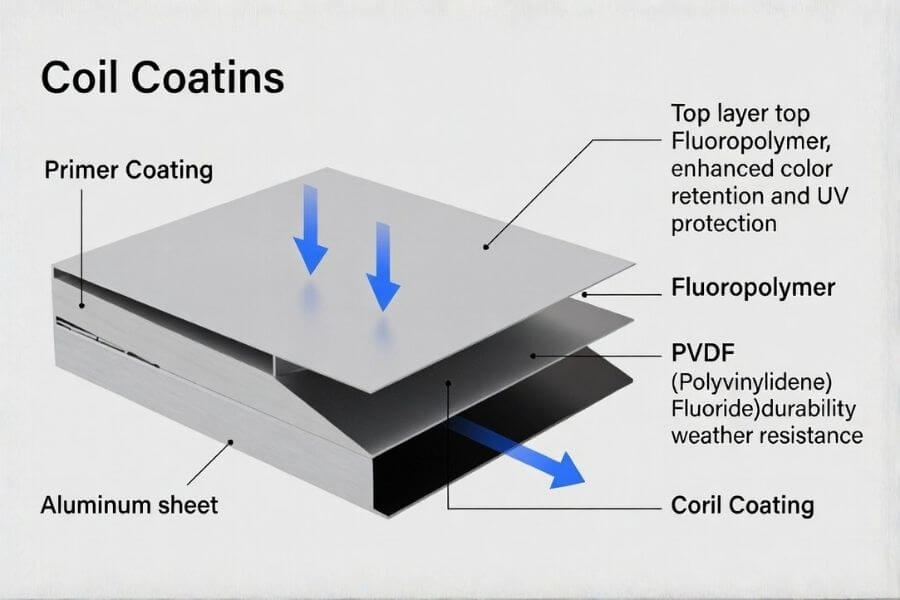
Key advantages of PVDF-based coating systems include:
strong resistance to UV exposure
stable color retention over time
protection against pollution and moisture
consistent surface appearance across large panels
During coil coating, aluminum sheets pass through several stages including surface preparation, primer coating, color coating, and curing. This layered coating structure protects the aluminum surface and ensures durability in exterior façade applications.
For architects and façade engineers, matte coatings also contribute to façade performance by reducing glare in high-sunlight environments and maintaining visual consistency across large building envelopes.
While standard architectural colors cover many applications, some projects require custom façade colors to match corporate branding or unique design concepts.
Custom color development typically follows a structured technical process.
The client submits a physical color reference or sample.
A spectrometer measures the sample to determine its tristimulus color coordinates.
Coating specialists develop pigment formulas that reproduce the color accurately.
Test panels are produced and evaluated for gloss, durability, and coating compatibility.
Once approved, the color is archived for future production.
Although digital measurement tools provide precise data, experienced coating specialists still rely on visual evaluation. Lighting conditions, viewing angles, and surface textures all influence how colors appear on finished façades.
With decades of composite material experience, Aluwell® supports architects who require custom finishes that align with architectural vision while meeting long-term performance requirements.
Architectural façade projects require coordination between design teams, contractors, and material manufacturers. Translating design intent into buildable façade systems often requires technical collaboration early in the project lifecycle.
Through the capabilities of its parent company ALUMAX Composite Materials Co., Ltd., Aluwell® provides integrated support throughout the design and construction process.
During early design stages, project teams must balance creative intent with engineering feasibility and cost efficiency.
Aluwell® works with architects and contractors to provide:
façade material recommendations
connection detail suggestions
installation guidance
This collaborative approach helps reduce misunderstandings between design concepts and construction realities.
With more than forty years of experience in composite material technology and equipment development, ALUMAX has accumulated extensive knowledge in panel manufacturing and structural design.
This expertise enables the development of:
customized panel structures
specialized coating finishes
unique architectural panel formats
The company has also participated in advanced material development as a qualified supplier for organizations such as Microsoft.
For complex façade systems, Aluwell® can provide modularized fabrication support. In certain projects, 1:1 installation mock-ups are assembled in the factory environment to verify panel alignment and installation procedures.
This preparation helps improve construction efficiency and reduce installation risks on site.
Large CNC processing centers allow Aluwell® to provide custom fabrication services including:
panel cutting and grooving
bending and shaping
specialized metal component production
By combining design, engineering, and manufacturing capabilities, Aluwell® supports projects that require precision and flexibility.
Matte composite panels are used across a wide range of architectural and industrial environments.
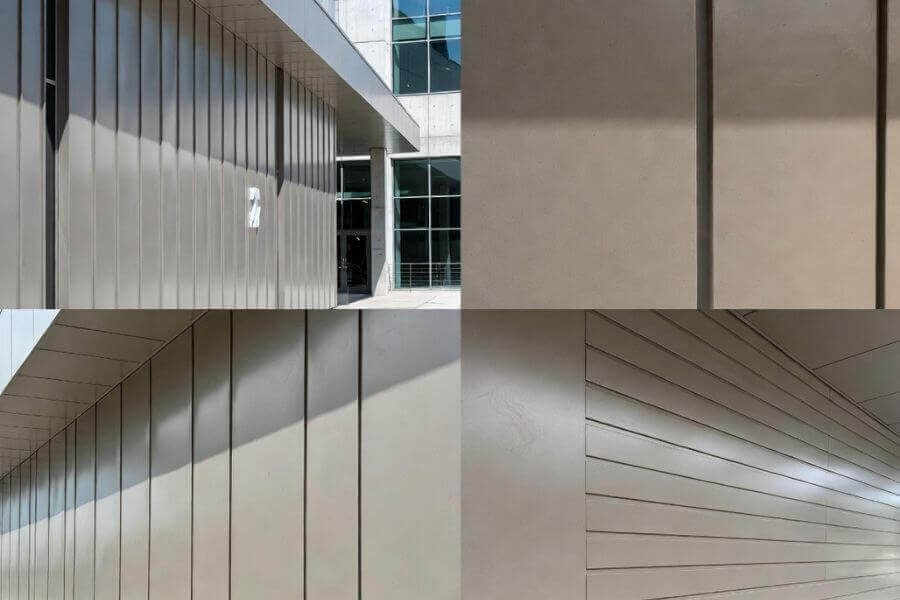
Common applications include:
Building Façades
curtain wall cladding
ventilated rainscreen systems
architectural façade feature panels
Interior Architecture
wall cladding
ceiling systems
interior partitions
cabinetry surfaces
Specialized Applications
transportation panel systems such as cargo vehicle bodies
architectural signage and brand structures
furniture panel applications
These applications can incorporate multiple material systems including:
aluminum composite panels
aluminum honeycomb panels
stainless steel composite panels
composite furniture boards
Through these material systems, architects can maintain consistent design language across both exterior and interior spaces.
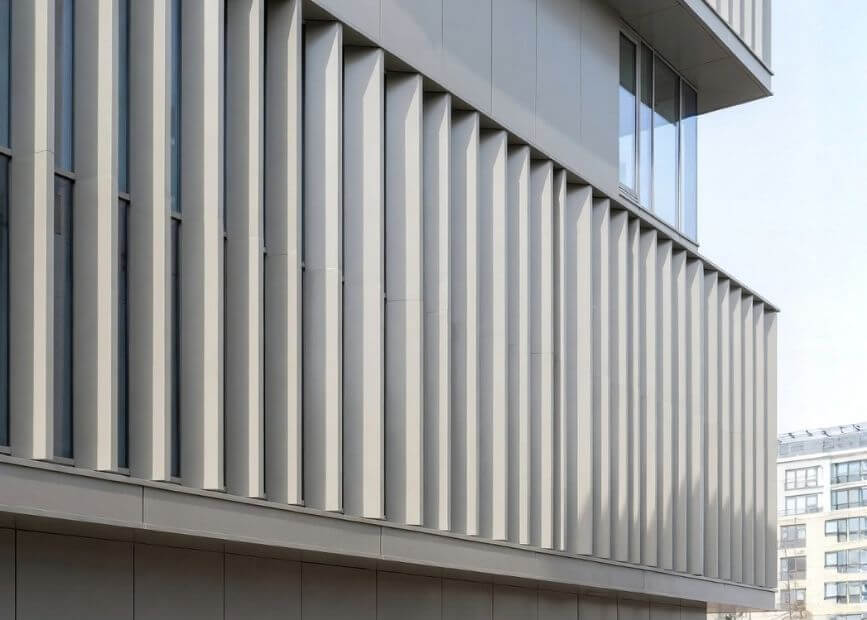
A contemporary public library project illustrates how matte aluminum composite panels contribute to both architectural aesthetics and façade performance.
Project overview:
Location — Vancouver, Canada
Building area — approximately 45,000 square feet
Façade system — ventilated rainscreen façade
Panel thickness — 4 mm aluminum composite panels
Installation quantity — more than 10,000 square feet of matte façade panels
The design team selected a combination of River Rock Gray and Slate Black panels to create subtle contrast across the façade.
The alternating matte tones helped reduce the perceived scale of the building while emphasizing horizontal architectural lines. Because the matte coating minimized sunlight reflections, the façade maintained consistent visual clarity throughout the day.
The ventilated rainscreen design also allowed airflow behind the panels, improving moisture control and long-term façade durability. This combination of aesthetic restraint and reliable performance made matte panels particularly suitable for a civic building intended to serve the community for decades.
Matte architectural panels combine aesthetic restraint with reliable performance. For many designers, they provide a practical way to achieve natural visual expression while maintaining technical durability.
Compared with highly reflective surfaces, matte aluminum composite panels offer several advantages:
reduced façade glare in strong sunlight
stable color perception across large building surfaces
compatibility with natural architectural palettes
durable PVDF coatings for long-term weather resistance
These qualities allow architects to design buildings that balance visual sophistication with practical construction considerations.
By integrating advanced composite panel technology, fabrication expertise, and project collaboration services, Aluwell® supports architects and contractors who require façade materials that perform reliably in real construction environments.
Are matte aluminum composite panels easy to clean?
Matte aluminum composite panels generally show fewer fingerprints and glare compared with high-gloss surfaces. Routine cleaning with water and a mild detergent is usually sufficient. The low-reflective coating also helps conceal minor marks, making matte façade panels easier to maintain in most commercial and architectural environments.
Can matte aluminum composite panels be used outdoors?
Yes. High-performance PVDF-coated matte aluminum composite panels are designed for exterior applications. The fluoropolymer coating protects the panel surface against UV radiation, moisture, and environmental pollutants, allowing the façade system to maintain stable color and durability under long-term outdoor exposure.
How do matte panels improve façade performance?
Matte coatings diffuse light and reduce strong reflections on building façades. This helps maintain consistent color perception across large surfaces and improves visual comfort in bright environments. For architects, matte façade panels can enhance façade readability while reducing glare in urban streetscapes.
Can aluminum composite panels be produced in custom colors?
Yes. Custom colors are developed through spectrometer analysis, coating formulation, and laboratory testing. This process ensures the final color meets architectural design requirements while maintaining coating durability, gloss stability, and compatibility with aluminum composite panel surfaces.
What is the difference between aluminum composite panels and aluminum honeycomb panels?
Aluminum composite panels consist of aluminum skins bonded to a lightweight core material, offering flexibility and cost efficiency. Aluminum honeycomb panels use a honeycomb aluminum core, providing higher structural rigidity and strength. The choice depends on project requirements such as façade design, span, and structural performance.
What surface finishes are available for aluminum composite panels?
Aluminum composite panels are available in a variety of architectural finishes, including matte coatings, metallic colors, solid tones, stone patterns, wood textures, and custom color systems. These finishes allow architects to match building façades with surrounding materials while maintaining long-term coating performance.